
Trade-in programme
Let your old system pay for the new one
We value the used system you have today and deduct it from the price of the new one. Brand does not matter; condition and spare-part availability do.
What we take in
The programme is brand-independent. We assess systems in the classes below whoever made them.
Used ultrasound systems
Console and portable colour doppler systems, any brand. Assessed together with their transducers.
Colposcopy systems
Optical and digital colposcopes. An imaging card and foot pedal raise the value.
Fetal monitors
Single and twin NST units. Probe count and the condition of the paper transport are decisive.
Aesthetic and surgical lasers
CO₂, diode and similar systems. Tube or bar life and the shot counter reading are requested.
What we cannot take
We put this up front so you do not reach the valuation stage only to lose the time.
- Models whose manufacturer support has ended and for which no spare parts can be sourced
- Systems with severe water, fire or impact damage where repair is not economical
- Systems for which no proof of ownership (invoice or transfer document) can be provided
- Systems carrying a lien, pledge or financial lease encumbrance
How it works
Five steps. We do not collect your old system until the new one is installed and confirmed working.
- 01
Details and photos
Send us the brand, model, year and probe list, with photos of the system, its screen and its probes.
- 02
Preliminary valuation
We share a range based on what you sent. It is not binding until confirmed by the on-site check.
- 03
On-site technical check
Our technician sees the system running: probe tests, image quality, error logs and cabinet condition.
- 04
Final trade-in value
After the check the figure is fixed and deducted from the price of the new system. You see the balance in a written offer.
- 05
Installation and transfer
Once the new system is installed and training is done, the old one is collected; the registry and invoice transfer are completed together.
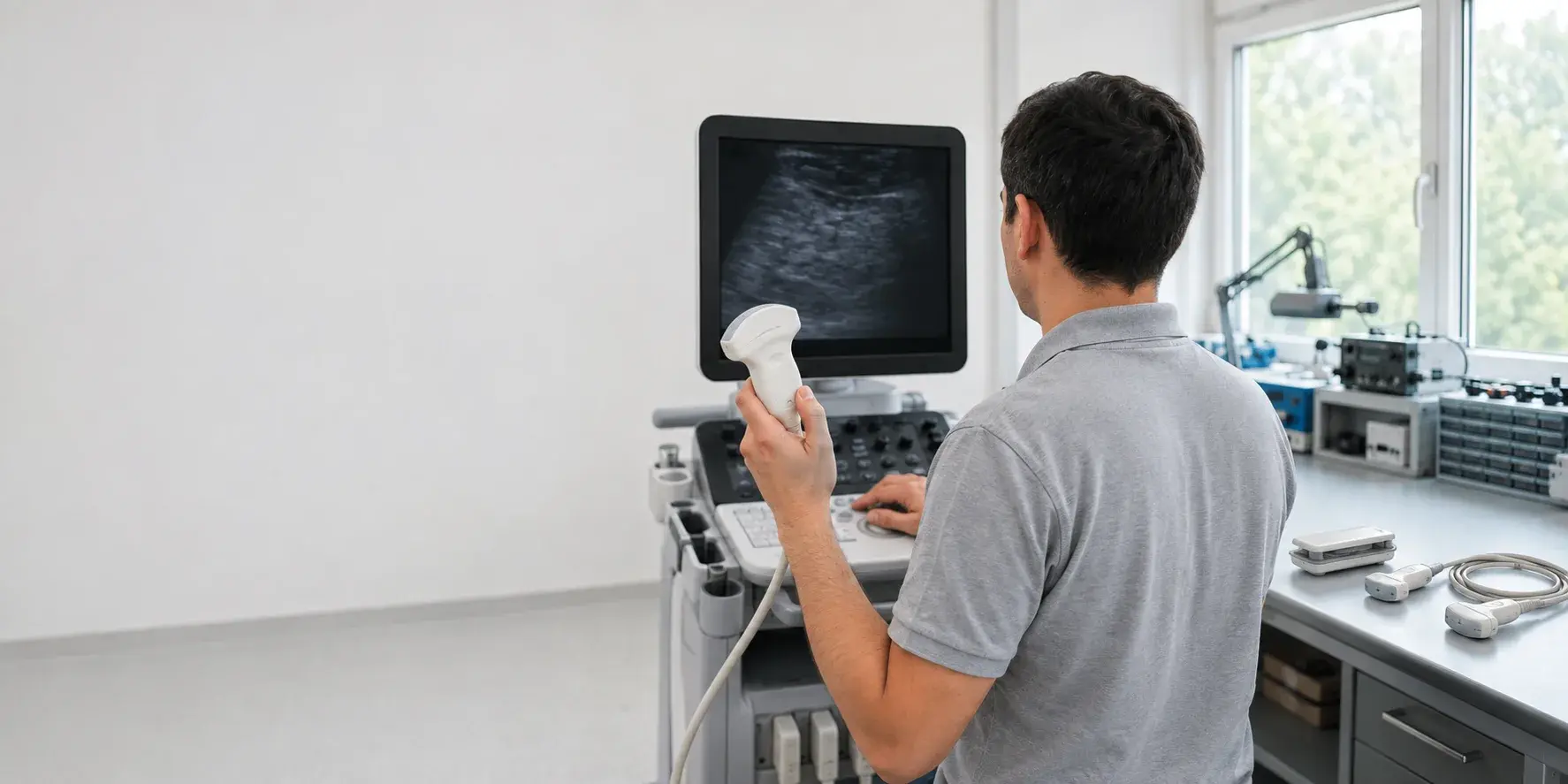
We look at your system while it runs
Valuation happens at the device, not on paper: probe tests, image quality and error logs.
What sets the trade-in value
We publish no figures here: two systems of the same model can be worth very different amounts depending on their probes. Instead we state plainly what drives the value.
Year of manufacture
Generations still receiving software and hardware support are valued markedly higher.
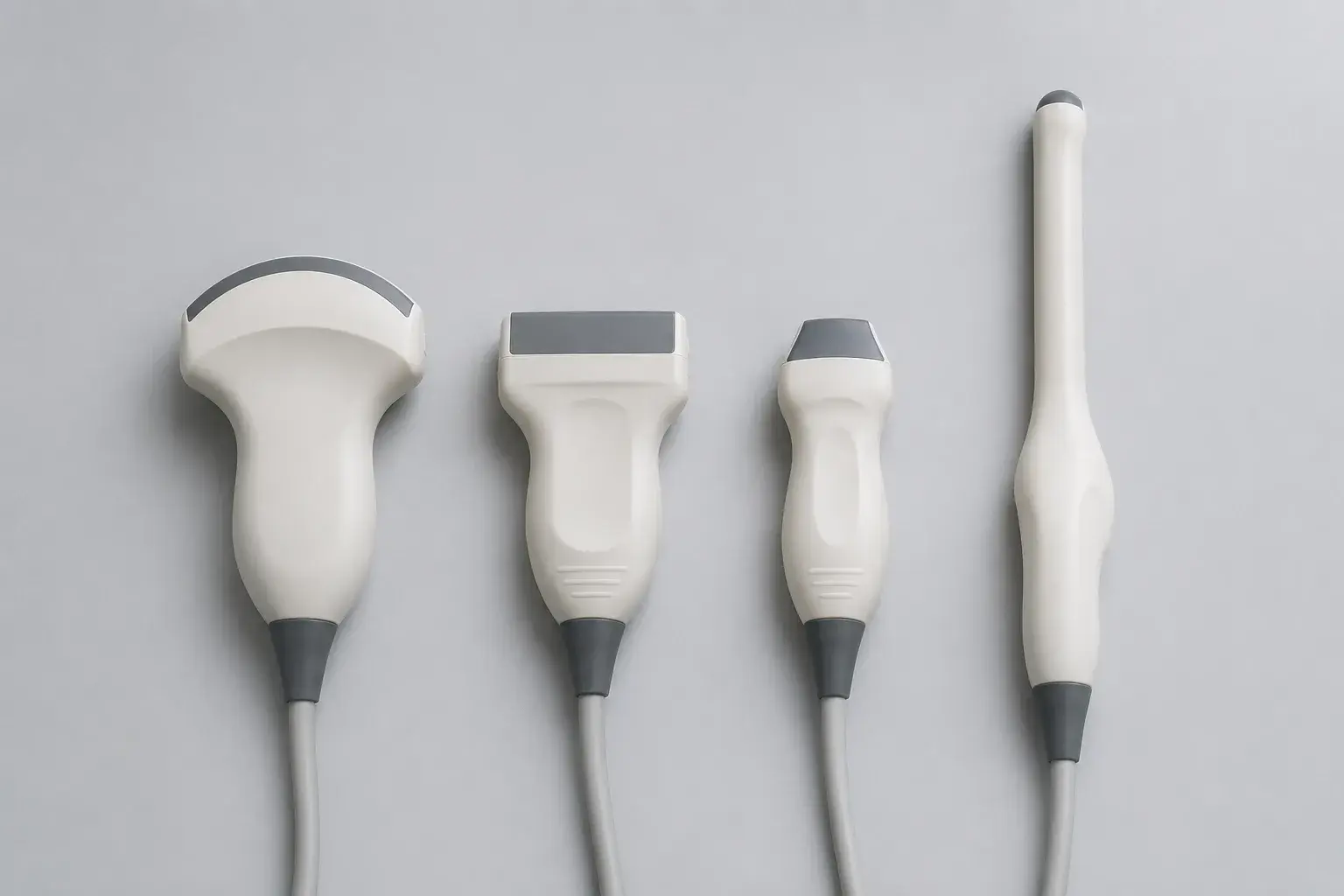
Probe count and condition
On most systems the bulk of the value sits in the probes. Cable cracks and dead elements cut it the most.
Working condition
The gap between a system that boots and images and a faulty one is larger than every other item on this list.
Service history
A regular maintenance record and original parts raise it; undocumented interventions lower it.
Accessories and hardware
Printer, foot pedal, trolley, original cables and licensed software modules are valued separately.
Registry and paperwork
A system with its registry entry, invoice and manual transfers quickly; missing paperwork slows it down.
Why there is no figure on this page
Any number given before the on-site check risks dropping after it. Rather than create that expectation, we issue the valuation in writing once we have seen the system. A preliminary range is shared in the first conversation.
Paperwork for the transfer
Missing documents stretch the process; preparing them early saves the most time.
- The purchase invoice or previous transfer document
- Product tracking system registry details, if any
- Written approval of the institution's authorized signatory
- The most recent maintenance and calibration report, if available
Frequently asked
Yes. The programme is brand-independent; what matters is that the system works and that spare parts can still be sourced.
Let us value your system
Just write the brand, model and year of your current system in the notes field of the quote form — we will treat it as a trade-in request.